
Category: General
Anger, and its risks
I’ve just had a piece go up at http://www.theguardian.com/commentisfree/2014/mar/04/anger-bad-for-health-has-uses

From early comments maybe I should have been clearer that my goal was, by the end of the short piece, to distinguish between types of anger. The Buddhist typology I spoke of is clearly not about anger – but the way things like Abhidhamma texts examine cittas such as chanda – and declare them ethically variable..
Oh – and for anti-anger Buddhism , the Pali Canon looks safe – but Wrathful Deities?
Life Extension and Fear of Death
So, I read this morning a piece on The Institute for Ethics and Emerging Technologies website about ‘Life Extension’. The piece itself (Don’t Drag Me Along into Your Grave, Daniel Callahan) by Maria Konovalenko is quite normal in regards of life-extension arguments. It makes ethical claims that failing to ‘treat’/look for a ‘cure’ to death is like being unwilling to treat/look for a cure for disease.
It also claims that the goals of life extension are not merely likely – but nigh-on inevitable:
even if the current biomedical advances are not yet powerful enough to cure aging and prolong the youthful state of the body, they definitely will be in the future.
I am not convinced – at all. Below is part of what I say in the Dispirited book about this..
The Strange Case of the Longevity Movement – An Aside
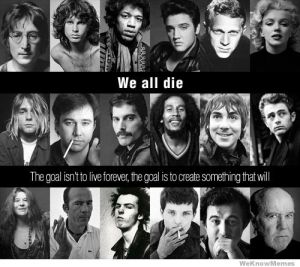
If death provides the impetus for understanding life; once we drag it from behind the Wizard of Oz-like curtains in our mind, it offers us the means to learn who we might be. But what if death really might be indefinitely postponed? Heidegger’s three features of death83 include the absolute inescapability of death, but close behind the growth in ‘happiness’ features in Sunday newspaper magazines, popular science publications and TV documentaries is the Longevity movement. The general line of thought is that given the prior rate of medical advance, and the prospect of genetic manipulation (especially the idea of an ‘ageing gene’84), indefinite human lifespans are surely only just around the corner. 85 The Daily reported in 2008 ‘Why Man COULD
Live Forever’86 and the Independent, in the same year, asked ‘Who wants to live for ever? A scientific breakthrough could mean humans live for hundreds of years.’ 87 Probably the most notorious advocate of this movement is Aubrey de Grey, with his view that the first humans to live for lifespans of around 1000 years will be born in the next decade or so. 88
While any detailed examination of the science invoked will promptly dispel the idea that such an ambitious extension to our lives is likely at all, and even a moment’s reflection will generate a host of reasons as to why it may be even less desirable that it is likely, it is still a compelling narrative. Who really wants to die – when they could just keep living? Of course mortality is necessary, and the species needs it – but not for me. Surely my survival, my ever-accumulating wisdom, will be a noble exception, a major benefit to society? We could all advance such self-serving arguments, but if we really take the idea seriously, we have to see it as an attempt to impose stasis on the inevitable flux that is reality, as John Gray recognises:
Seekers after immortality look for a way out of chaos; but they are part of that chaos, natural or divine. Immortality is only the dimming soul projected on to a blank screen. There is more sunshine in the fall of a leaf.
The longevity movement shares one notable feature with much of the spirituality movement, which is the desire to appear somehow at the very cutting edge of science, but also in some type of tension with ‘the establishment’ of science. The tone of longevity writers often makes little or no explicit reference to spirituality, although they do often share an interest in the ‘holistic’, and the idea that somewhere in ‘ancient wisdom’ secrets may be hidden away. The issue that makes them interesting here, though, is the motivation itself. Given that death is inevitable, that mortality and finitude is blindingly and undeniably the frame in which we live our lives – why engage in these grand acts of self-delusion? Of course, some life extension may be possible, but death will not be denied, and, even if delayed a little en route by healthy living and medical advances, is coming for us all soon enough. I can only see a single psychological motive underpinning the longevity movement, and this is the same reason it sells newspapers and fascinates so many of us. This motive is our absolute and total fear and dread. The more we have suppressed death, the more we may fail to express our anxiety – but it has gone nowhere. I would contest that underneath the cheery hopes of living for centuries is a screeching, desperate flailing panic at the knowledge of our own, personal, death. The fact of death is, alas, still a fact; and longevity and immortality are as useless as the cheap trinkets of ‘heaven’ and post-death-life. What little we can do, surely, consists of the staring down, and confronting of the truth of death. This choice promises no escape, but at least offers us the chance to live a life where death’s long shadow does not taint every thought via poorly-repressed anxiety.
No, really, what does Christian theology want from philosophy?
I actually enjoyed reading this, you might too:
Is Mind-Body-Spirit (MBS) Spirituality Necessarily Individualistic?
Thanks to Lloyd for this material:

Our colleague Dave Webster’s latest book Dispirited (Winchester/Washington: Zero Books, 2012) argues, among other things, that the form of spirituality promoted by MBS advocates tends to be individualistic and fosters disengagement from the socio-political sphere. Webster is in good company as this is also argued by, amongst others, Robert N. Bellah, Richard Madsen, William M. Sullivan, Ann Swidler & Steven M. Tipton, Habits of the Heart: Individualism and Commitment in American Life (Berkeley: University of California Press, 1985); Fredric Jameson, Postmodernism or the Cultural Logic of Late Capitalism (Durham: Duke University Press, 1991); Charles Taylor, Varieties of Religion Today (Cambridge: Harvard University Press, 2002); and Adam Possamai, Religion and Popular Culture: A Hyper-Real Testament (Brussels: P.I.E. Peter Lang, 2007). However, within the sociology of religion, this remains a contested area with a number of sociologists arguing for “engaged spirituality” rather than the “spiritual individualism” advocated by the above scholars. A…
View original post 370 more words
on mindfulness, muggles, & crying wolf
An important debate – one we’ll be seeing more of as mindfulness spreads more and more.. I foolishly read the comments too..

 I try. Really, I do.
This month has been bubbling with various posts on Eastern scholars decrying Western Mindfulness. It began with Ron Purser and David Loy’s HuffPo article, Beyond McMindfulness which is likely the first time anyone from the Buddhist scholarship community has overtly taken on the therapeutic, coaching Mindfulness machine. In brief, Purser & Loy expressed concerns that the current movement of Mindfulness is not only denaturing the dharma but also lending power to corporations so that already-beleaguered employees can be lulled into a somnolent state through practices like “nonjudgmental awareness.”
The results of the Purser & Loy article were not what I would have expected: linguistic mudslinging. Protests from what may be called the “secular” mindfulness groups were no less than defensive and somewhat histrionic. Sadly, there were worthy points in the protests but mostly lost in the defensiveness and the mutually admiring comments that followed. (There’s…
View original post 1,262 more words
Self Designation: Spiritual? Religious? Neo-Religious? Åndelig?
At the CESNUR 2013, I ask Knut Melvaer and Margrethe Løøve about their work…
Judith Butler Explained with Cats
A bit off topic – but hard to resist..

Following hot on the heels of Foucault Explained with Hipsters, here’s JB’s Gender Trouble explained in Socratic dialogue style. With cats.
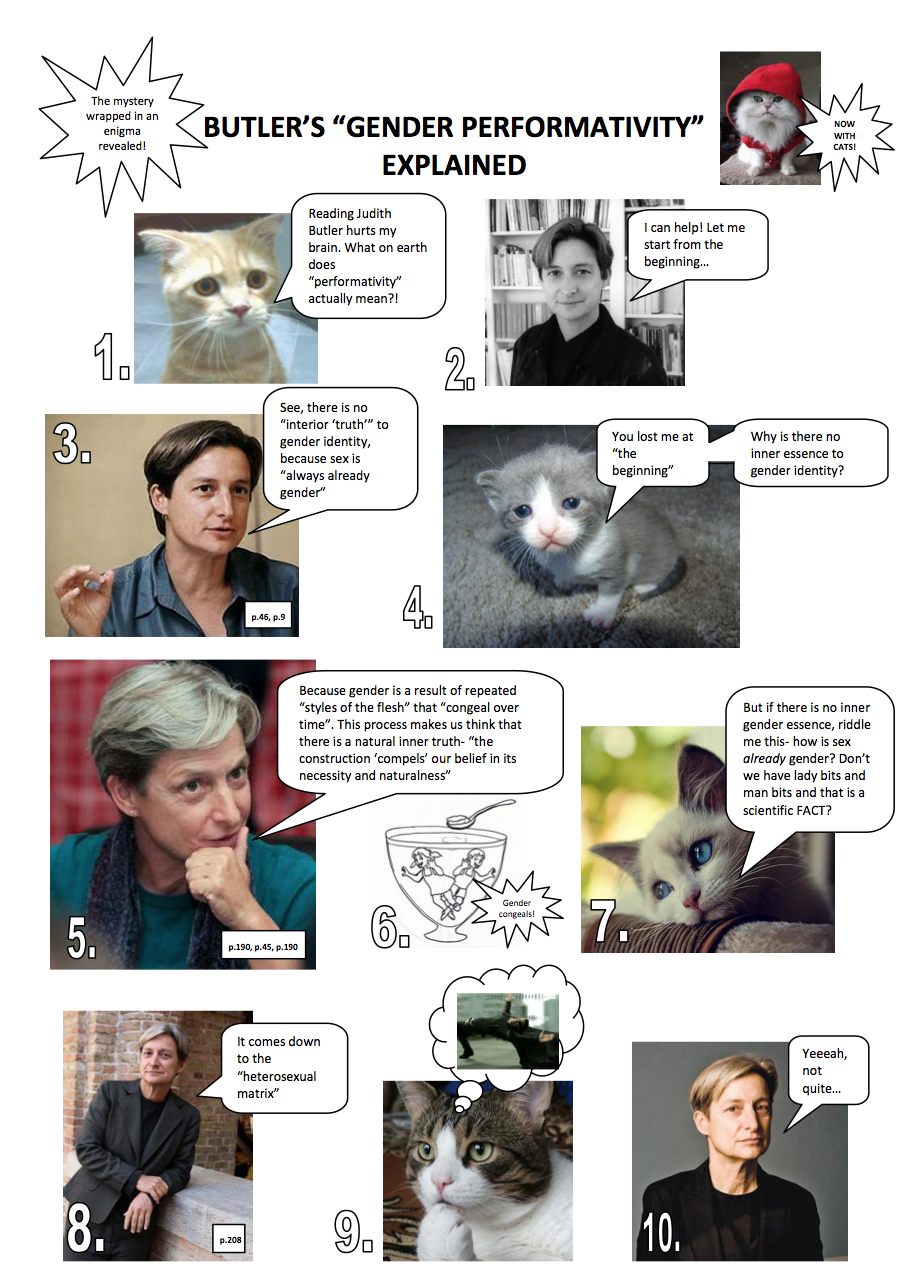

All page references from Butler, J. (1990 [2008: 1999]). Gender Trouble: Feminism and the Subversion of Identity. New York; London: Routledge.
Got any more ideas for philosophy/sociology/gender theory you’d like to see explained in comic form? Let me know in the comments below.
Is the promotion of mutual respect and tolerance incompatible with the faith ethos of some schools?
Clearly not all Faith Schools in the UK have these failings, but this still seems rather serious and disturbing..

Jonny Scaramanga
The Government has repeatedly affirmed its support for faith schools and parents’ right to pass on their religious beliefs. At the same time, standards for independent schools, announced last year, require the promotion of “mutual respect and tolerance of those with different faiths and beliefs”. Has the government considered cases where the promotion of respect and tolerance is incompatible with the school’s faith ethos?
Media reports have emphasised extremism in Muslim schools, but my research indicates that some evangelical Christian schools are also preaching intolerance. I am researching the approximately 50 Accelerated Christian Education (ACE) schools in the UK. Belief in the eternal damnation of unbelievers is part of ACE’s statement of faith.
In cases like this, where religion makes exclusive truth claims, other beliefs are necessarily seen as inferior. Evangelical Christianity views other religions as at best ‘man-made’ – in contrast to evangelicalism’s God-made Truth –…
View original post 615 more words
 Dispirited