Heathen atheists? Part 1…

As promised, I wanted to make some comments about Julian Baggini‘s article in the Guardian, his Heathen Manifesto.

As I said in a previous post, I share much of his view that atheism is too often seen as arrogant, shouty and aggressive. That doesn’t mean that this is true of all, or even that many, atheists, but the discussion of Theism and Atheism in the public realm is often futile, combative and just plain annoying. So I was heartened by his statement of intent:

Julian BagginiThis manifesto is an attempt to point towards the next phase of atheism’s involvement in public discourse. It is not a list of doctrines that people are asked to sign up to but a set of suggestions to provide a focus for debate and discussion. Nor is it an attempt to accurately describe what all atheists have in common. Rather it is an attempt to prescribe what the best form of atheism should be like.

This seems intriguing, at least. And off he goes with 12 principles. I will not be delving into all of them in detail, in this post. Just the first one. But I shall (be warned) return to some in the future…

He starts with what atheists call themselves. There has been much discussion around this. Some feel ‘atheist’ is too negative – too much “not-one-of-those”. So perhaps ‘humanist’.

I don’t much like this term, which I discuss the term in Dispirited, where I state that:

Humanism often has noble intentions, but regularly appears as a parody of religious groups.

I go on to say more – but the term seems rather aged and locked into a liberal, institutional political setting in our culture that means it only appeals to some atheists, and really repels others. That won’t do then. We have ‘brights’ for atheists.

Calling those who reject the supernatural and the theistic ‘brights’ is fairly new, but already seems in decline. Despite Daniel Dennett’s claim that ‘bright’ doesn’t imply that the religious person is ‘dim’ – most seem to read it that way, and I would be surprised to see the term last another decade in common use. So – Baggini is right in that stage may be set for a new term.

So he opens the manifesto with: 1. Why We are Heathens.

I have seen a lot of criticism of this term. I don’t much like it myself, and don’t expect it to catch on. Lots of critics have complained that heathen actually has two main flaws:

  1. Heathen historically has referred to believers. Whether it be historical pagans of various sorts, or some damn variety of neo-pagan reconstructionists, they have been believers. Often in many Gods, or Godessess, or in some kind of nature-focused monistic pantheism. But they clearly where/are not unbelievers.
  2. The other objection is that term is often used in a derogatory manner, as a (not very strong) insult against the ungodly. It certainly has a pejorative tone.

Those making objection 1 have a point, but it is not that fatal. Words change their meaning over time – and I am sure Baggini knows the problem, but thinks the benefits derived, and common usage as time goes on, will deal with its legacy-meanings.

Objection no.2 is clearly only put forward by those who have not fully read, or taken on board, what Baggini has to say about the term. Indeed, they seem to miss his key point in favour of the term by doing so. He knows that it is a pejorative term. That is his point, to a large degree. He says so:

If we want an alternative, we should look to other groups who have reclaimed mocking nicknames, such as gays, Methodists and Quakers. We need a name that shows that we do not think too highly of ourselves. This is no trivial point: atheism faces the human condition with honesty, and that requires acknowledging our absurdity, weakness and stupidity, not just our capacity for creativity, intelligence, love and compassion. “Heathen” fulfils this ambition

While I am still unconvinced by the actual term – the first point here is telling. Atheists are often portrayed (and I don’t intend, here, to get into the details of whether there is any basis for that portrayal) as over-earnest, smug, humourless and arrogant. This term demonstrates humour, and humility. Two substantial virtues. I was rather surprised that so many rushed to point out that the term was offensive and abusive -when that was actually (at least in large part) the actual point of selecting it.

So I will not be using the term, I dislike the register and also think it sounds way too close to all those mind/body/spirit things that I’d like to disassociate from atheism. However, I think he is well justified in looking for a better term here. Just for the record, I like his principles 3, 5 (a bit), 7, and 10 (only a little, but yes).

So for now – what will I call myself? Maybe I’ll have to stick with miserable, atheistic, existentialist nihilist git for a while longer yet…
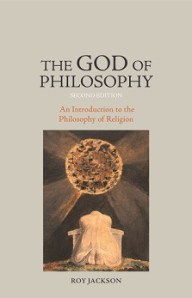
Philosophy of Religion resources?

If anyone has interests in the Philosophy of Religion – I would recommend a look at a new blog from Dr Roy Jackson, at http://www.godofphilosophy.com/.

There are resources, some short videos, stuff that may be useful for revising students, and a sample chapter from the second edition of his God of Philosophy book. There is also a blog, and Roy will be adding more and more to the site as time goes on.

Photo blog

In the spirit of endles social media, rolling ever onwards, I have a tumblr photo blog at http://dispirited-dave.tumblr.com/

Buddha Butter Dish

This is to showcase images of Contemporary Spirituality which seem to typify the issues raised in the book. It will also be somewhere for the images

I collect of the Buddha / Buddhism, which seem rather culturally clashing, commercially crass or just plain weird. One of the first ones is the I Can’t Believe It’s Not Buddha butter dish that I saw in Bristol today – here it is to whet your appetite foe the tumblr collection. I will be adding my existing Buddha pics to the tumble blog too, for those that have seen me display them as part of lectures/talks…

Soul Loss?

I know, I know – I was going to look at Julian Baggini’s 12 Rules for Heathens – and I will keep that promise. But: I didn’t know then about Soul Loss.

‘What is Soul Loss?’ I hear you ask. What indeed. It is ‘one of the main reasons people get ill, from a shamanic point of view‘. After telling me that shamanism dates back 40,000 years (I am not even going to begin with that claim) the article ends its first page with the helpful: Physically, the symptoms of soul loss can be pretty much anything.

So how do I know if I’ve lost mine? A shaman will help. The main cause is trauma in the past.

Now – were this all a set of metaphors for psychological distress and its impact – that might actually work perfectly well. We may have problems linked to our past, and we can use a range of images to explore and picture them and this may well help. But what struck me here was the literalism:

In a soul retrieval the skilled shamanic practitioner leaves their own body and enters into shamanic reality. This is usually (but not always) done to the accompaniment of a shamanic drum or rattle. Working with the help of their power animal(s) and other guides, the practitioner finds the soul part of the person they are journeying for and attempts to persuade it to return. If it agrees to return, the part is then gathered up, brought back to this reality and then literally blown back into the person’s body. [http://www.therapeutic-shamanism.co.uk/soul%20retreival.html]

I really am not sure what this might mean… So I looked at other Soul Retrieval providers – such as http://www.devimangohealing.com/whatissoulretrieval.htm where (after the 40,000 years claim is repeated) there is some very similar material. It seems that the key text here is the 1991 work by Sandra Ingerman called Soul Retrieval:  Mending the Fragmented Self. I have ordered a copy – and will report back.

In the meantime I note that http://www.liberate-online.co.uk/Soul-Retrieval.aspx offer soul retrieval by telephone (I wonder if it is available by text?), and that at the same site there is the claim:

So, how does soul loss manifest itself? How does someone know that they are affected by soul loss? In my experience, clients tend to make statements such as, “I don’t feel all here” “I feel lost” “I feel part of me is missing” “ A part of me died when she died” “I feel like I am constantly searching for something, but I don’t know what it is”– all these statements are indications of soul loss.

I would, from my perspective, probably rather suggest that these are indication of grief, lonliness, or existential angst at the absurdity of life. They do however also have the effect of making people feel vulnerable and at risk of exploitation by those peddling ‘answers’ which claim so much. In reality, these troubles often cannot be fixed, and certainly not easily and with ‘spirit work’, surely when people read (same site):

Everyone suffers soul loss at some point, either in the current life or former lifetimes, yet this can be swiftly rectified. It is a real blessing to do this work, the results can be miraculous!

They can begin to sense why the Mind-Body-Spirit world makes me so angry and upset?
Also I can reccomend you to look at spiritplantjourneys.com in Peru.

Heathen Manifesto? Is this what we need?

In a recent article in The Guardian, Julian Baggini wrote what he called his ‘heathen manifesto’.

These 12 rules for heathens were his way of trying to go beyond the view of atheists as militant extremists with whom it is pointless to enter into debate. Back in September 2011, Julian wrote about a ‘stalemate’ in the debate about God.

So far – quite interesting. There is a tone of shouty hectoring in some atheist writing. There is a tendency to let the extremes or the most superstitious or crass elements of faith stand for the whole of religious phenomena. In my next blog post I will begin to look at some of the 12 rules – and return later for the rest.

But before I move on – if Dr Baggini is concerned about this stalemate, that must indicate that he has a view that a debate around religion is potentially fruitful and worth facilitating.

Why?

At the end of the September 2011 piece he writes of wht needs to be done to:

get beyond name-calling and move this debate forward.

What I wonder is: forward to where?

I raise this not (only) because I am a contrary git, but because I am not sure of what the function of a debate between atheists and theists is. Is it to convince each other to change our views? While better debate in such matters may be preferable, I doubt that such activity makes any difference to where most of us stand: that is – one’s faith (or lack thereof) is rarely the result of a rational, dialectic process. Humans don’t seem to quite operate like that. Furthermore, I am not sure that this is what Julian has in mind: he is not proposing a debating chamber where atheists convert theists (or vice versa). So what kind of debate would he like?  He notes (in the Rules) the importance of secularism, and I largely agree with him on this point. However – this seems non-negotiable (rightly) – so what is there to debate?

I agree that atheists need to clarify our position, to work together and individually to face various challenges: existential, political, ethical and more. That is partly why I wrote Dispirited. However while we might well learn from some aspects of some religious traditions (to disavow this view does seem like militant dogmatism), and have personal and philosophical discussions within the detail of more and less individual contexts and settings: the idea of ‘public debate’ between the larger social groupings seems to make little sense to me. As an aside, I am not quite sure even what ‘public debate’ actually means: does anyone else?

Julian Baggini writes:

It is time, therefore, for those of us who are tired of the status quo to try to shift the focus of our public discussions of atheism into areas where more progress and genuine dialogue is possible

I agree that there is work to do here, and will in future posts engage with the idea he puts forward in his manifesto, but I wonder what we might recognise as success in the context of a public discussion, or what public dialogue even hopes to be.

Mystic Narrative…

In Dispirited one of the claims that I make is regarding the way mysticism is presented. I will get to what I write in the book shortly – but wanted to note that in the talks on the book I have been giving, I have been asked is there is evidence for my assertions re this presentation of mysticism. I thought it was obvious – and part of our common cultural currency, so didn’t feel too worried…

The view I am talking about is the narrative that claims that all faiths are drawing on the same (or variations of the same) Noumenous experience (though they don’t always use Otto’s term), which has been distorted by the institutionalisation of formal religion. But some have always seen through this, to the common experiential core that they believe underpins all faith. These few have known a dangerous truth – which threatens political strucutres and might unite allf aiths  – and so mystics have long been persecuted.

Familiar? [I hope so…  The book contains a longer version, of course]

I did however ensure my view that this is widespread was accurate. It is. http://timeless-wisdom.blog.co.uk/2010/03/05/world-mysticism-8120212/ for example talks of

The Hidden History of Mysticism runs like a thread through all religions but belongs
to none of them
It is finding a spiritual basis for human unity beyond ‘partisan’ religious divisions
To build bridges to a common understanding of a common human spirituality is the way
TO UNIVERSAL TRUTH

This is only one example, of course, but seems to perfectly capture that narrative I was trying to describe. One of the themes in Dispirited is that the ‘partisan’ divisions are exactly what matters: this is how we inch towards actual truth (as opposed to ‘universal’?) – though arguing and  really disagreeing, not disavowing disagreement in the name of some hidden, ineffable, asserted underlying commonality..

SBNR Watch 1: The Hunger Games

[SBNR = Spiritual But Not Religious.. I will be keeping an eye on the use of this phrase  – where I stand on this term is fairly clear.]

In a blog at the Washington Post, an author (Diana Butler Bass) discusses the absence of religion from the recently released film ‘The Hunger Games’ (which I have yet to see), and titles her piece: ‘The Hunger Games: Spiritual But Not Religious’.

She discusses the film’s exploration of sacrificial violence, love, violence and non-violence and such matters (which she notes, rightly, are often themes of theological reflection). Then there is this concluding section which made me wonder – did the author choose the SBNR title? -She writes:

“The Hunger Games” points out that the world envisioned by spiritual leaders like Gandhi and Martin Luther King is infinitely preferable to a world of “bread and circuses,” where the many are controlled by the very few. The future hangs between these two visions: Will we be Panem or some other sort of world?

No religion in “The Hunger Games”? The story eschews religions that glory in crusades, jihads, nationalism, militarism, and imperialism. In Panem, there is no place for religion that supports injustice. The enslaved neither want nor need such a religion. Banished are religions that celebrate bloodlust. There is too much of that already

She mentions a ‘spiritual world’ – but then she seems to imply that just because the world here envisioned is not drenched in innocent blood and injustice does not mean that it is not a religion – just not a certain  type of religion… Of course, one might argue that such a world is not spiritual at all – and that what the author calls “the hard-earned hope that human beings can create a better world based not in sacrificial violence but in sacrificial love” can be carved out in a world with neither religion nor spirituality…

I will say no more till I actually see the film…

Energy?

This morning, I was (and I knew it was probably unwise..) at http://dawnofenlightenment.co.uk/ and was reading away – largely interested in how the word ‘enlightenment’ is used in Mind, Body & Spirit (MBS) contexts. This interest derives from my work on Buddhism, and my concern that MBS materials often seem to imply that their usage is equivalent to what Buddhists mean by enlightenment or ‘awakening’. But, as is so often the case online, I was distracted. I was distracted by the line below – the first line at the website (which is largely an advert for a MBS fair/event):

There is a definite change in direction and in the flow of energy around the universe at this time.

This led to two initial thoughts: what do they mean by ‘energy’, and how can they be sure (of this change)? Looking at the organisers, I realise that their use of the term may be linked to their being Reiki ‘healers’. The foundational belief for Reiki is that there is a universal life energy, which is all around us – but actually Reiki has very little to say about what this energy is, and what its characteristics are, and how it can be accounted for, perceived and demonstrated. In looking at the nearest Reiki centre to me at http://reikimassage.wordpress.com/what-is-reiki/ I noticed this phrase:

There is no belief system attached to Reiki so anyone can receive or learn to give a Reiki treatment, the only prerequisite is the desire to be healed.

Now this is interesting! This seems to very much chime with my claims in the book that there is a disavowal of belief in the MBS milieu. If you assert nothing, it would seem that you can side-step the burden of proving anything, and be free to claim anything. Further to this, is there not a fundamental conflict between the belief in the Reiki energy force and the absence of beliefs? While I have written (with Dr Paul Fuller) on the issue of ‘beliefs vs no-beliefs’ in a Buddhist context – at least the Buddhist account seeks to engage with this tension. In MBS it seems a way of evaporating tensions.

If we have no beliefs, it might seem that we inhabit a post-conflict setting of holistic consensus. However, such a setting seems at odds with the substantial implied truth claims of the MBS world – that there is a life energy, that we survive death as spirit, that there are angels, and the like. If we disavow belief – how can we disentangle these claims?

What you will notice at a MBS fair is that there is no attempt to do so – and the (seemingly contradictory) claims of all these practitioners, with all their varied accounts of reality (with differing implied metaphysical models, beings, accounts of personhood, etc.) all sit happily side-by-side – as though all can be true at once.  They cannot. This is part of what truth means – and this is part of my argument (in the first chapter of Dispirited) that the MBS movement presents a threat to our understanding of what truth is – and disengages its audience from the use of intellectual rigour and caution.

Reflections post-NTU..

I have been doing talks about the Dispirited book recently – in places as diverse as Swindon, Oxford, Lund (in Sweden), Cheltenham & yesterday at Nottingham Trent University...

These have all been very interesting, and some of the questions that have been raised are addressed on the FAQ page. However, last night I thought that one particular question really was on to something – which I think is interesting. This is the distinction between the producers  and the consumers of (particularly new-age/Mind-Body-Spirit) spiritual materials/events/workshops. While I would maintain that the consequences (of spirituality) that I propose in the book are applicable to both these groups, it may well be the case that they are applicable in different ways, or to differing extents.

I am hoping to reflect somewhat more on this – and may add to this post, as I think there is probably more to be said..

What is Dispirited about?

The back-cover blurb from the book should give an idea:

When someone tells me that they are “Not religious, but very spiritual”, I want to punch them in the face. Hard…

Dispirited argues that contemporary accounts of spirituality are a dead end for human potential, a threat to intellectual rigour, and opposed to social and political engagement. Rather than accept the “Spiritual, But Not Religious” response as the only alternative to either formal religion or egotistical, shallow consumerism, Dispirited argues for a post-spiritual response to the existential realities of life.

Refusing all inwardness and consolation, David Webster faces down spirituality’s guile in favour of a bleak atheism’s hints of a worthwhile life. Bracing, timely stuff! Peter Manley Scott, University of Manchester

This is as close to a “must read” as it gets, for the religious as well as the spiritual reader, as well as for atheists. Dr. Mikael Askander, Lund University, Sweden

Dr David Webster is Principal Lecturer in Religion, Philosophy and Ethics at the University of Gloucestershire. His main work is in Buddhist thought, and its relationship to Western Philosophy.